Security and Low-Voltage Glossary
This glossary explains the terms you will hear when you plan an alarm, fire alarm, camera, access control, cabling or central vacuum project. Each definition is short and written the way we would explain it at your kitchen table.
- Alarm permit
- A registration an alarm site must hold in some cities. The City of Reno requires one for each alarm site and Sparks requires one as well; unincorporated Washoe County has not asked for one since September 8, 2024.
- Arm / disarm
- Turning the alarm on or off. Away mode arms every sensor, while Stay mode arms the doors and windows but leaves interior motion sensors off so you can move around.
- Biometric reader
- An access control reader that identifies a person by a fingerprint or other physical trait instead of a card or code.
- C-2c and C-2d
- Nevada contractor classifications. C-2c covers electrical sensors and alarms that detect heat and smoke; C-2d covers low-voltage systems such as telephone, sound, closed-circuit video and computer networking systems (NAC 624.200).
- Cat6 and Cat6A
- Categories of twisted-pair network cable. Cat6A runs 10-gigabit Ethernet the full 100 meters of a standard run, while Cat6 is rated for 10 gigabits only over a shorter run, about 37 to 55 meters depending on conditions.
- CCTV
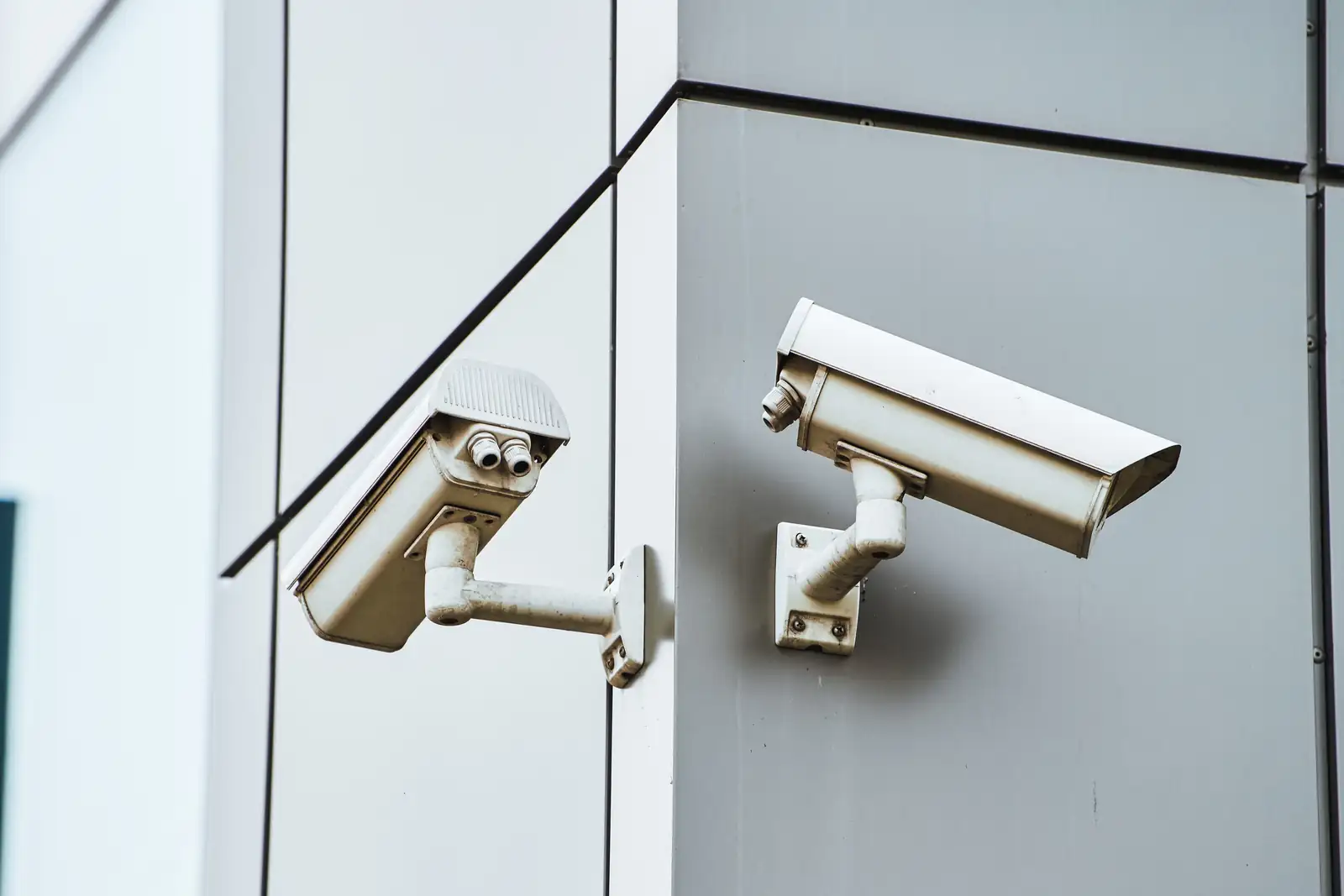
- Closed-circuit television: a camera system whose video goes to specific recorders and monitors rather than being broadcast. The term is now used for most security camera systems.
- Central station
- A staffed monitoring center that receives signals from alarm systems and contacts the right people or agency. Ours is UL-listed and staffed by highly trained operators.
- Central vacuum system
- A vacuum whose power unit sits in a basement, garage, crawl space or utility room, with tubing running inside the walls to wall inlets. You plug a hose into an inlet and the unit pulls debris to a central canister.
- Communicator
- The device in an alarm system that sends signals to the central station over a phone line, the internet or a cellular network. If it fails, the alarm can still sound locally but may not reach the monitoring center.
- Control panel
- The brain of an alarm system. It reads the sensors, applies the arming rules, sounds the sirens and tells the communicator what to send.
- Credential
- Whatever a person uses to open a controlled door: a card, fob, PIN, fingerprint or a phone.
- Duress or panic code
- A special alarm code or button that sends a silent or audible emergency signal. Reno's fee schedule lists a higher charge for false robbery, duress and panic alarms than for a false burglar alarm.
- DVR
- Digital video recorder. It records video from analog cameras at the recorder itself and is common in older camera systems.
- ECV (enhanced call verification)
- A procedure in which the central station makes two calls to responsible parties before requesting police dispatch on a burglar signal. It applies to burglar signals.
- Electric strike
- Door hardware that replaces the strike plate in a door frame and releases the latch when an access control system sends it a signal.
- Entry and exit delay
- The short time after you open the door, or after you arm the system, to enter your code or leave before the alarm sounds.
- FACP (fire alarm control panel)
- The main panel of a fire alarm system. It monitors detectors and pull stations, runs the horns and strobes, and reports to the monitoring center.
- False alarm
- An alarm activation that did not result from a real emergency. Cities may charge fees for them; Reno's published fee for a false intrusion alarm is $98.
- Fob
- A small keychain device that acts as a credential for a door reader.
- Glass-break detector
- A sensor that listens for the sound of breaking glass, or senses its vibration, to protect rooms with large windows.
- Heat detector
- A fire detector that responds to a set temperature or rapid rise in temperature, used where smoke detectors would be set off by dust or steam.
- IBC and IFC
- The International Building Code and International Fire Code. Reno and Truckee Meadows Fire Protection District enforce the 2024 IFC with regional Northern Nevada amendments.
- Initiating device
- Any device that starts a fire alarm signal, including smoke detectors, heat detectors and manual pull stations.
- Inlet
- A wall-mounted valve in a central vacuum system where you plug in the hose.
- Intercom
- A two-way audio or video system for talking to someone at a door, often tied to a door release.
- IP camera
- A camera that sends digital video over a network cable or Wi-Fi to a recorder or the cloud.
- IP monitoring
- Sending alarm signals to the central station over an internet connection instead of a phone line.
- Keypad
- The wall-mounted unit used to arm and disarm an alarm system and see its status.
- Low-voltage
- Wiring and equipment that run at a low voltage, such as alarm, camera, network, intercom and audio cabling. Under Nevada's C-2d class, these systems do not exceed 91 volts or use fiber optics.
- Motion detector
- A sensor, usually passive infrared (PIR), that detects movement in a room.
- NFPA 72
- The National Fire Alarm and Signaling Code published by the National Fire Protection Association. It covers how fire alarm systems are installed, tested and maintained.
- NICET
- The National Institute for Certification in Engineering Technologies. Reno Fire's fire alarm submittal checklist asks for plans by a NICET Level II technician or stamped by a professional engineer.
- Notification appliance
- A horn, bell, speaker or strobe that warns occupants when a fire alarm activates.
- NSCB
- The Nevada State Contractors Board, which licenses contractors. Contractors can be looked up by license number on its public search.
- NVR
- Network video recorder. It records digital video from IP cameras over the network.
- OSDP
- Open Supervised Device Protocol, an access control standard for communication between a reader and its controller. It supports encryption and two-way communication.
- Patch panel
- A wall- or rack-mounted panel where cables from every room end, so that each connection can be linked to a network switch with a short patch cord.
- PoE (power over Ethernet)
- A way to deliver power and data to a camera, access point or phone over a single network cable.
- POTS
- Plain old telephone service: the traditional copper landline. Alarm systems have long used it to report; the FCC has been streamlining copper retirement, so many systems are moving to cellular or internet paths.
- Prewire
- Low-voltage cabling placed in a home while the walls are open, so the home is ready for networks, cameras, audio and alarms later.
- Prox card
- A proximity card that sends a fixed number to a reader when held near it. It is the older style of access card.
- PTZ camera
- A camera that can pan, tilt and zoom, either by operator control or by preset patterns.
- Rack
- A standard-width metal frame that holds network equipment, panels and recorders in a closet or telecom room.
- Retrofit
- Installing a system in a building that is already finished, such as adding a central vacuum or a fire alarm upgrade to an existing property.
- REX (request to exit)
- A sensor or button that releases a controlled door from the inside so people can leave without a credential.
- State Fire Marshal F license
- The Nevada license for fire alarm companies. Type F covers fire alarms and protective signaling systems; our number is F 486.
- Structured cabling
- A standards-based network of low-voltage cable, patch panels and outlets that carries data, voice and video through a building.
- Supervision
- A feature that lets a system check that its devices and wiring are connected and working, and send a trouble signal when they are not.
- Tamper switch
- A sensor in a device or enclosure that signals when someone opens or moves it.
- Trouble signal
- A message from an alarm or fire system that something needs attention, such as a low battery or a lost connection. It is different from an alarm.
- UL 827
- UL's standard for central-station alarm services. UL says a station is Listed after an on-site examination and is audited each year.
- Video doorbell
- A doorbell with a built-in camera and speaker that lets you see and talk to visitors from your phone.
- Wiegand
- A long-used wiring format for sending card data from an access control reader to its controller. OSDP is a newer alternative.
- Zone
- A single sensor or group of sensors reported separately by the alarm panel, such as the front door or the upstairs motion detector. In audio, a zone is a room or area with its own speakers and volume.
Sources (3)
- law.cornell.edu: law.cornell.edu/regulations/nevada/NAC-624-200 (checked November 2026)
- UL Solutions: ul.com/services/central-station-service-certification (checked November 2026)
- City of Reno: reno.gov/Documents/Fire/Prevention/2024%20IFC%20amendments%20RFD%20012026.pdf (checked November 2026)