If your alarm reports over an old copper phone line, check how it reaches the monitoring center, because the phone companies are allowed to retire copper faster than they used to. An alarm with a dead communicator still sounds in the building but cannot call for help.
Key points
- Federal rules have loosened so carriers can retire copper lines with less notice.
- A panel on a retired line still sounds locally but may not reach the central station.
- A phone service delivered over the internet or cable is not always the same as a copper line.
- Test your alarm's signal to the monitoring center whenever your phone or internet service changes.
- The older 3G cellular shutdown in 2022 showed the same lesson for cellular units.
- Our central station accepts POTS, internet protocol (IP) and cellular reporting.
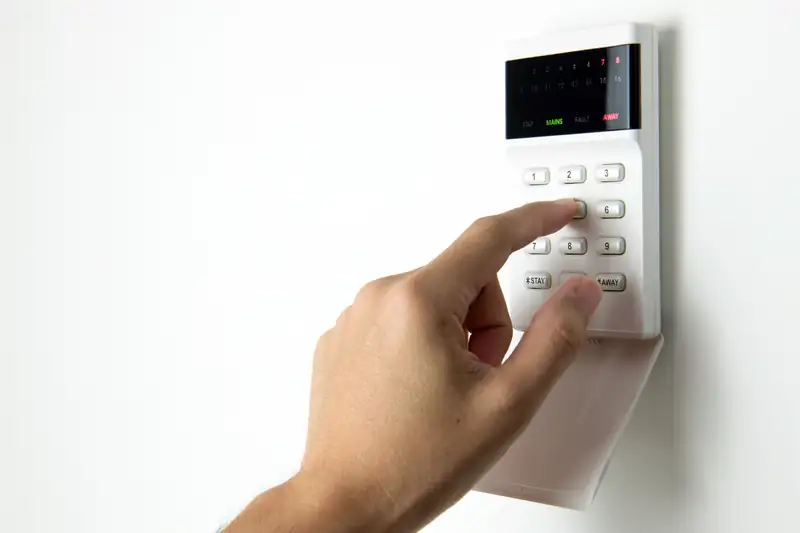
For decades the standard way for an alarm panel to reach a central station was an ordinary phone line, called POTS for plain old telephone service. That line is going away in stages. Nothing in this guide means your system has stopped working. It means you should know how yours calls out and have a plan if the line changes.
What is actually changing
The Federal Communications Commission has been easing the rules that carriers follow when they retire copper networks. A Wireline Competition Bureau waiver order dated March 20, 2025 (DA 25-252) reduced some notice requirements, the Commission proposed making changes permanent in a July 24, 2025 notice (FCC 25-37), and on March 26, 2026 it adopted an order (FCC 26-19) streamlining copper retirement and technology transitions. Both the 2025 proposal and the 2026 order are on the FCC's site.
We have not found a published retirement schedule for any particular street, so the sensible approach is to find out how your panel reports now and keep that path healthy.
What a lost line means for an alarm
When an alarm panel cannot call out, the siren and keypad still work. That is the dangerous part, because the system looks healthy from the front door. Nobody at the monitoring center hears about a break-in, and nobody is dispatched.
Industry reports after AT&T shut down its 3G cellular network on February 22, 2022 put the number of alarm devices needing upgrades at 1.5 to 2 million, according to Axios. The lesson from that shutdown applies to copper as well: the technology under the communicator is the customer's risk until someone checks it.
How to check your system in 15 minutes
- Look at your panel or its paperwork for the word communicator, dialer, cellular or IP. If you see only a phone cord plugged into the panel, it is probably a landline dialer.
- Ask your carrier what kind of line you have. A line delivered through a cable modem or a fiber box is a digital voice service, which may behave differently from copper when power or internet fails.
- Request a test signal from your monitoring company and ask them to confirm they received it and how it arrived.
- Repeat the test after any change to your phone, internet or cable service.
- Write the date and result on the panel's service sticker or with your alarm paperwork.
Your choices if the line is on its way out
Alarm panels can report by phone line, by your internet connection or by a cellular radio. Each has trade-offs, and many systems use two. We compare them in our cellular, IP and landline guide and describe the hardware on our communicators page.
- Add a cellular communicator to the existing panel when the panel itself is in good shape.
- Add an IP path, with cellular as the backup, if you have dependable internet.
- Replace the panel if it is too old to accept a communicator, which a technician can tell at the first visit.
Where we come in
We monitor over standard phone lines, internet protocol and cellular transmission through a UL-listed central station, so we can work with whatever path suits your building. We start with a free on-site consultation to see what your panel is today. We have been serving Northern Nevada since 1989, and we have been through earlier technology changes like this one.
If you are a business with other equipment on copper, such as a fax or a phone system, bring that up too. Alarm reporting is only one thing hanging off the line, and a change to one affects the others. For a home, the home alarm monitoring page explains what monitoring includes.
Sources (3)
- Federal Communications Commission: docs.fcc.gov/public/attachments/FCC-25-37A1.pdf (checked November 2026)
- Federal Communications Commission: docs.fcc.gov/public/attachments/FCC-26-19A1.pdf (checked November 2026)
- axios.com: axios.com/2022/02/22/att-3g-sunset-wireless-disrupt-devices (checked November 2026)