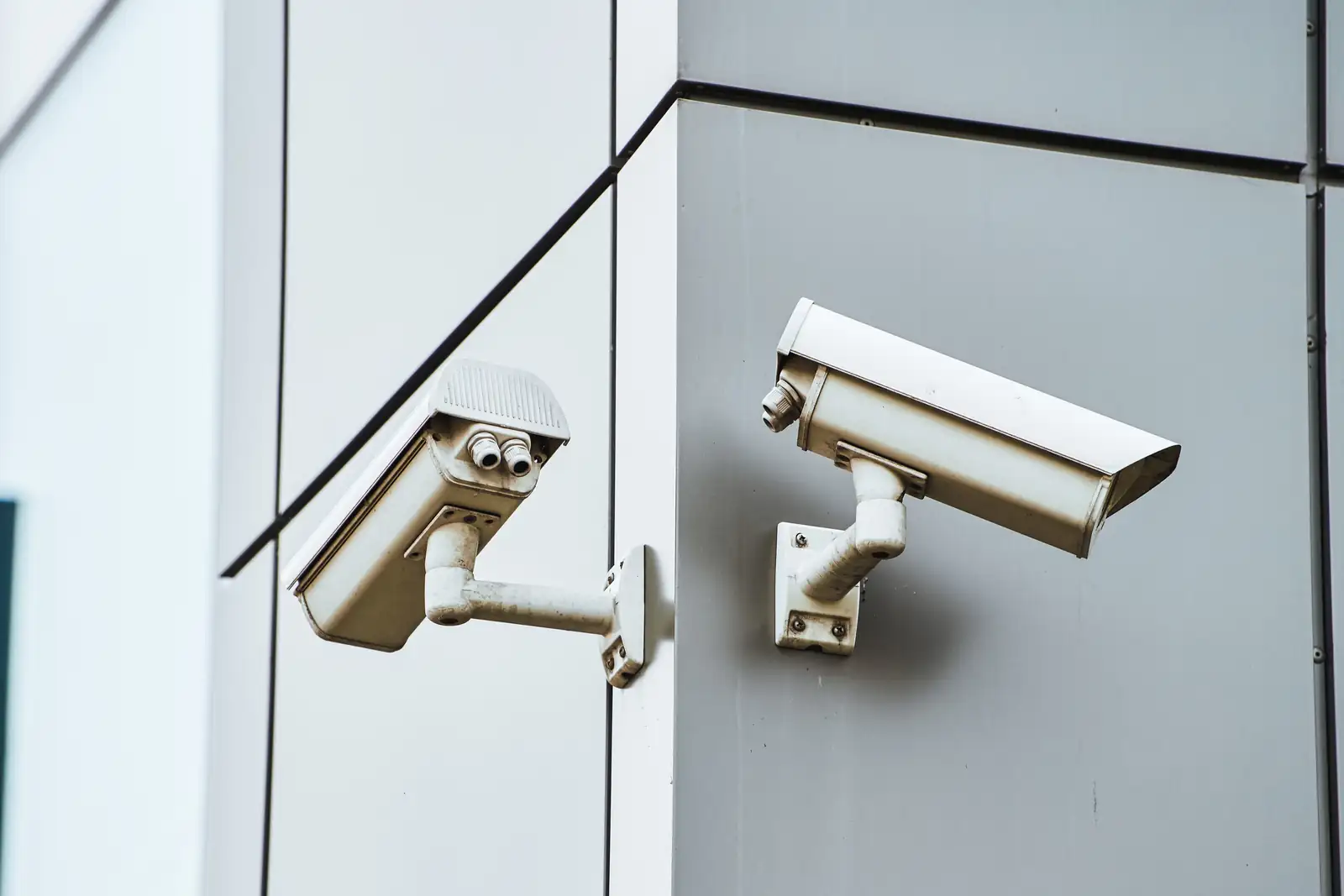
A PoE (Power over Ethernet) camera gets both power and video through one network cable, which makes it the steadier choice for a permanent system. A WiFi camera skips the data cable, but it still needs power and depends on your wireless signal.
Key points
- PoE sends power and video over one network cable.
- A standard Ethernet run can reach 100 meters (328 feet).
- WiFi cameras still need power, from a cable, an adapter or a battery.
- A wired link does not compete with phones, streaming and neighbors' networks.
- Many properties end up with a mix, chosen camera by camera.
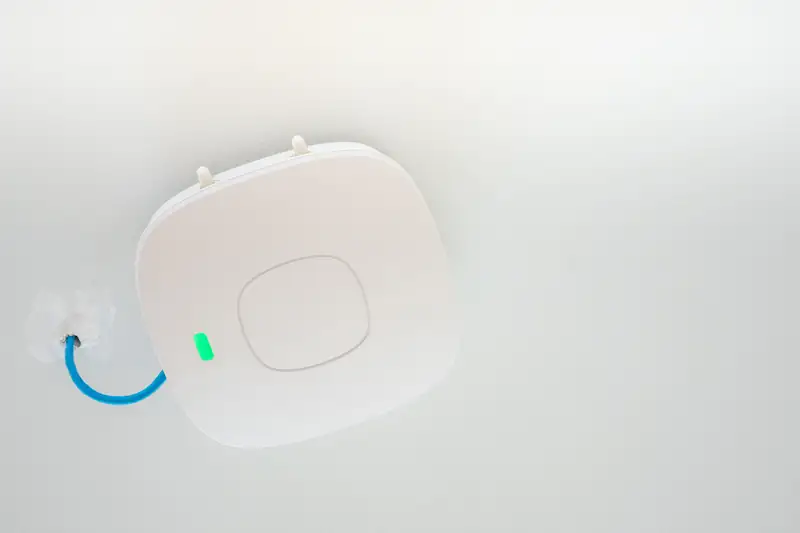
People often hear that wireless cameras are easier and wired cameras are better, and both are partly true. The real choice is about where each camera will go, what is behind the wall, and how much you depend on it. This is how we weigh the two when we plan a system.
How each type works
A PoE camera connects by network cable to a PoE switch or a recorder with PoE ports. That single cable carries the picture to the recorder and delivers the camera's power, so there is no separate power supply at the camera and nothing to plug in at the soffit.
A WiFi camera sends video over your wireless network. It does not need a data cable, but it needs power from somewhere: a cable and adapter, a solar panel or a battery. Batteries need charging or replacing, and the camera is only as reliable as the wireless link between it and the router.
Side by side
| PoE (wired) | WiFi (wireless) | |
|---|---|---|
| Data link | Network cable | Your wireless network |
| Power | Same cable | Separate adapter, battery or solar |
| Reliability | Steady; not shared with other devices' wireless traffic | Depends on signal strength and interference |
| Install effort | Cable has to be run to each camera | Fewer holes, but power must still arrive |
| Best fit | Permanent systems, outbuildings, businesses | Indoor spots and places where a cable run is not practical |
Distance: why 100 meters matters
Structured cabling standards set a maximum channel length of 100 meters (328 feet) for twisted-pair Ethernet, made up of 90 meters of permanent cable plus patch cords at each end. That is the limit that applies to a PoE camera on a standard run. That figure comes from the TIA-568 cabling standard, as summarized by CommScope.
On a typical house or shop, 100 meters covers a lot. A long driveway, a barn or a detached shop may need a switch partway or a different approach, which is a point to settle during design. Our structured cabling work is the same low-voltage cabling that carries those runs.
When WiFi is the right call
- A spot where no cable can reasonably reach, such as a finished wall that is not worth opening.
- A temporary or low-stakes view, such as a pet camera indoors.
- A building where a network cable is not allowed or practical, with a strong, stable network.
- A video doorbell that replaces an existing doorbell and uses the doorbell wiring.
A wireless camera is only as good as the signal at its mounting spot, so check it there before you commit. See our video doorbell page for those.
When PoE is the right call
- Anything you want recording around the clock without worrying about the wireless network.
- Exterior cameras on a stucco or wood-frame wall where a cable can run inside the soffit or attic.
- Business systems with many cameras, where cable run quality matters.
- Locations with a lot of wireless traffic, such as dense neighborhoods and apartment buildings.
Moving from an older DVR system
Many existing systems record analog cameras on a DVR (digital video recorder) over coaxial cable. An NVR (network video recorder) records IP cameras over network cable, which is where PoE comes in: the same cable carries the picture and the power. Systems of Nevada installs CCTV, IP and wireless cameras, indoors and out, with DVR or NVR recording, video doorbells and remote viewing on your phone.
Mounts, conduit and sometimes the cable runs themselves can be reused, and a new network cable is the cleaner path because it powers the camera too. Our camera system upgrades and repair page compares DVR and NVR systems side by side and lists the signs an old system is due for replacement.
Libby in Sparks wrote that the technicians who installed her cameras were "very polite and thoughtful and cleaned up after themselves as they worked." That is the standard we hold every install to.
What this means for cost and upkeep
WiFi cameras cost less to install per camera when power is available, and PoE costs more in cabling labor but gives you a steadier result. Costs depend on your building, so we price each system after the free on-site consultation. Battery cameras add a recurring chore: someone has to charge them.
Whichever you pick, give the cameras a good recorder or a reliable cloud link, and make sure you can view them remotely. Our wired work is low-voltage, covered under Contractors Board license 0042143, whose C-2d class includes closed circuit video systems.
Sources (3)
- commscope.com: commscope.com/cat-6a/ (checked November 2026)
- Wikipedia: en.wikipedia.org/wiki/Category_6_cable (checked November 2026)
- law.cornell.edu: law.cornell.edu/regulations/nevada/NAC-624-200 (checked November 2026)