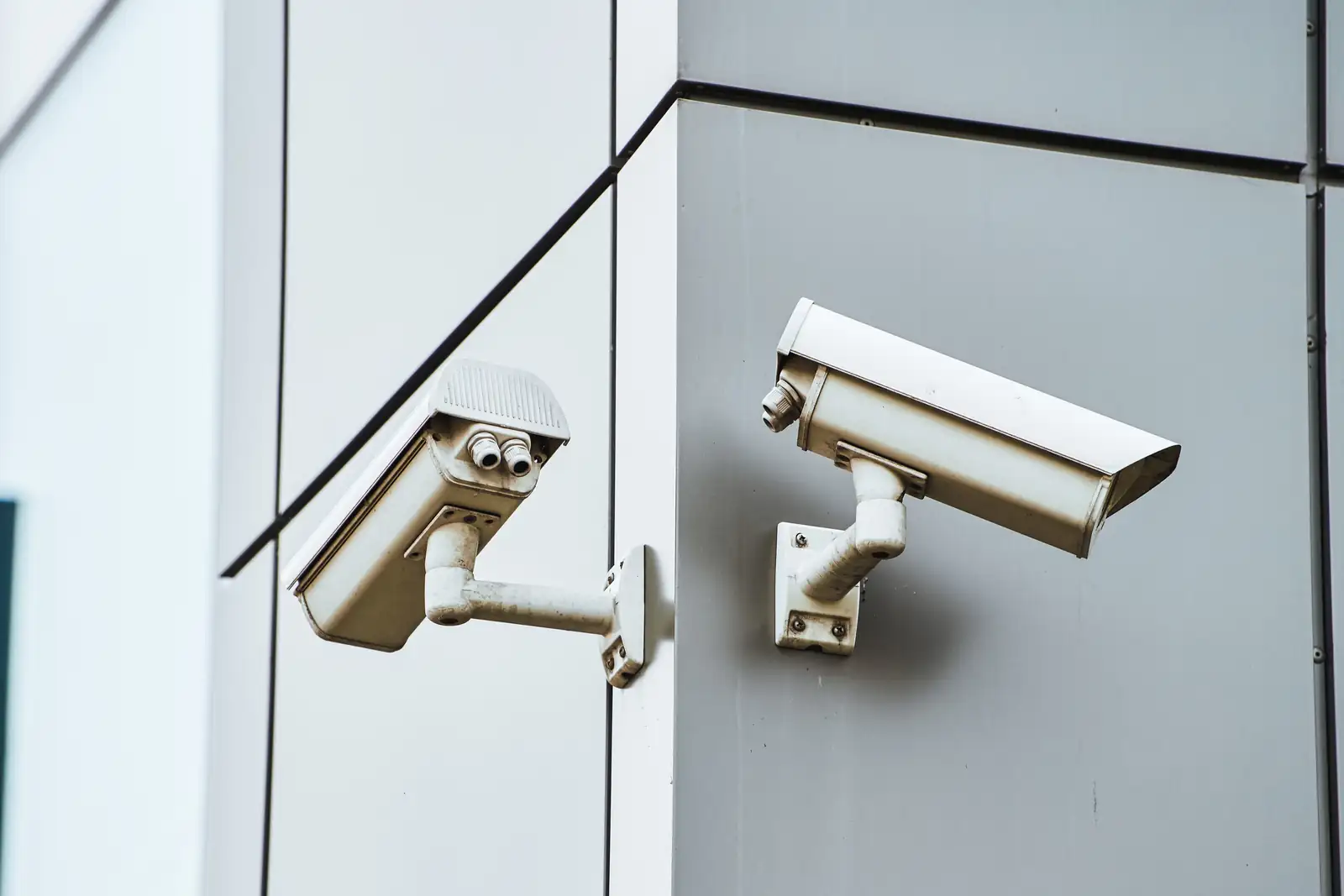
Put cameras where people have to pass: the front door, the driveway or garage approach, side gates and any door that is out of sight of the street. Aim each one at a doorway or a path rather than a wide empty yard, and keep every lens on your own property.
Key points
- Cover entrances and approaches first: front door, garage, driveway, side gates.
- Mount cameras high enough to be out of easy reach, but low enough to see faces.
- Aim at a path or doorway, not at the sky or a bright horizon.
- Aim at your own property, not into neighbors' windows; NRS 200.604 makes capturing intimate images without consent a crime.
- Plan the cable or power route before you pick the spot.
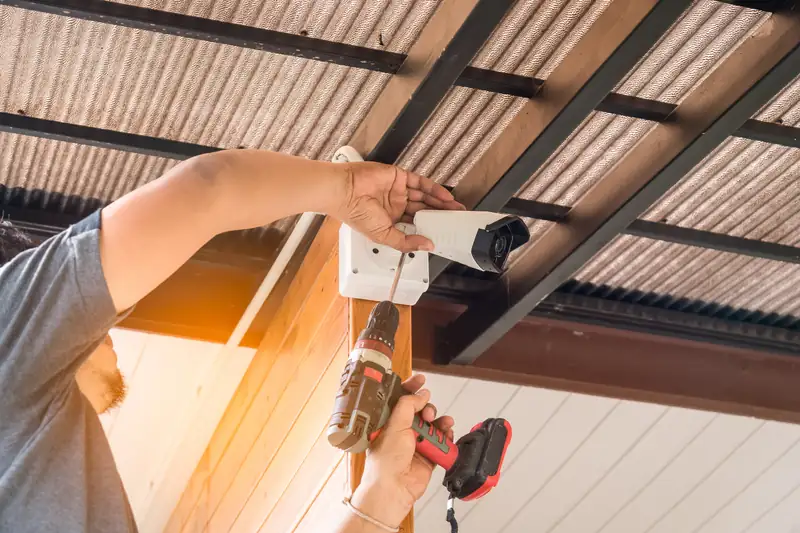
Camera placement decides whether you get a clear face and a timestamp or a blurry shape at the edge of the frame. The same equipment can be a great system or a useless one depending on where it is mounted. These are the placement rules we follow when we plan a home or small business system, plus the limits that keep you on the right side of your neighbors and Nevada law.
Start with how people actually arrive
Walk the property the way a visitor, a delivery driver or someone with bad intentions would. Where do they come from, where do they stop, and which doors do they touch? Those are your camera spots. A camera that watches a doorstep tells you more than three that watch the lawn.
For most homes that comes down to five places, listed in the table below. Businesses add loading docks, cash areas and any door that staff use after dark.
| Location | What it catches | Placement note |
|---|---|---|
| Front door | Visitors, deliveries, package pick-ups | Face height or a little above; a video doorbell often covers this |
| Driveway and garage | Vehicles and anyone on foot approaching the garage | Cover the apron, not the whole street |
| Side gate and back door | Entries out of view from the road | Wide enough view to see who opens the gate |
| Rear yard | The far edge of the property | Watch the fence line or patio door rather than open lawn |
| Inside, at main entries | Who comes through the door | Optional; point at the door, never at bedrooms or bathrooms |
Height, angle and light
A common installer approach is to mount a camera high enough that it cannot be reached or knocked from the ground, but not so high that all you see is the top of someone's head. The right height depends on the camera's lens and the distance to the area it covers, so we choose it on site.
Light matters as much as height. Aim away from the sun at the hours when it sits low, avoid pointing straight at a bright light, and consider what a street lamp or porch light will do to the night image. Night vision cameras help, but they cannot rescue a camera that faces a glare.
Snow, cold, sun and wind in Northern Nevada
Outdoor cameras here deal with cold nights, snow, low winter sun and wind. Every camera has an operating temperature range in its specifications; check it against the coldest nights where the camera will hang, since a spot at Incline Village or in Washoe Valley runs colder than the valley floor in Sparks.
Mount under an eave or overhang, away from the roof edge where sliding snow lands and above where plowed or shoveled snow piles up. A hood or sunshade keeps snow and ice off the glass and cuts glare from a low sun. Battery cameras lose run time in the cold, so wired power is steadier for outdoor positions; our PoE and WiFi guide compares the two. Wind can shake a camera mounted only to trim, so mount to framing or masonry and keep pole arms short.
- Before winter, check housings and seals and clean the lens.
- After the first storm, look at the live image for ice or a blocked view.
- In spring, check for mounts loosened by wind and thaw.
- In summer, check for webs, dust and new tree growth in the view.
Think about the time of day
People picture burglaries at night, but the FBI's 2025 national figures list noon to 6 p.m. as the most frequent time of day for burglary and breaking and entering, with 161,764 reported incidents in that window. That is when many homes sit empty. Seasonally, the Bureau of Justice Statistics found household burglary about 11 percent lower in winter than in summer (1993 to 2010 survey data), so cameras matter all year. It is a good reason to make sure your cameras see well in full daylight and that your system can alert you while you are at work.
If package theft is your main worry, a camera on the doorstep matters more than one on the roof. Industry surveys find it is common: Security.org's 2026 report says about 30 percent of American adults have had a package stolen at some point. That is a survey, not an official count.
Keep to your own property
Nevada's NRS 200.604 makes it a crime to knowingly capture an image of another person's private area, which the statute defines as the naked or undergarment-clad intimate areas of the body, without consent and where the person expects privacy, such as in a bathroom or bedroom. In practice, aim cameras at your own property, not into a neighbor's windows, and keep them out of bathrooms and bedrooms that are not yours. Cameras that also record audio are a bigger legal question, and our guide to Nevada camera and recording laws goes into it. This is general information, not legal advice.
If you live in an HOA, read your CC&Rs first. Nevada has no statute we could find written specifically for homeowner cameras, so the association's rules usually decide.
Plan the cable and power route
- Pick each camera spot from the list above.
- Decide how it will connect: a network cable that also powers it, or a wireless link plus a separate power source. Our PoE and WiFi comparison explains the choice.
- Trace the route for a low-voltage cable from the camera back to the recorder, through the attic, soffit or a crawl space.
- Check the spot at different hours for glare and shadow.
- Mount, aim, then look at the live image from the viewing app before you tidy the cable.
When to have a technician plan it
A site visit saves rework. We walk the property, look at what each camera will really see, and design a system that fits your home or business. Systems of Nevada does this as part of a free on-site consultation, and the work is low-voltage installation under Contractors Board license 0042143. See home security cameras and our free consultation.
Sources (5)
- FBI Crime Data Explorer: cde.ucr.cjis.gov/LATEST/resources/reports/UCR_Summary_of_Reported_Crimes_in_the_Nation_202 (checked November 2026)
- Nevada Legislature: leg.state.nv.us/NRS/NRS-200.html#NRS200Sec604 (checked November 2026)
- security.org: security.org/package-theft/annual-report/ (checked November 2026)
- Nevada Legislature: leg.state.nv.us/NRS/NRS-116.html (checked November 2026)
- bjs.ojp.gov: bjs.ojp.gov/content/pub/pdf/spcvt.pdf (checked November 2026)