You can mount a TV over a fireplace if the wall is strong enough, the heat is manageable and the height will not strain your neck. Check the heat first, then the wall, then where the cables and power will come from.
Key points
- Heat is the first question: wood, gas and electric fireplaces behave differently.
- Eye level matters; a very high screen is tiring to watch.
- The wall must support the mount, which means finding studs or masonry.
- Plan the cable route before the TV goes up.
- We mount the screen and run the low-voltage cables to where the equipment lives.
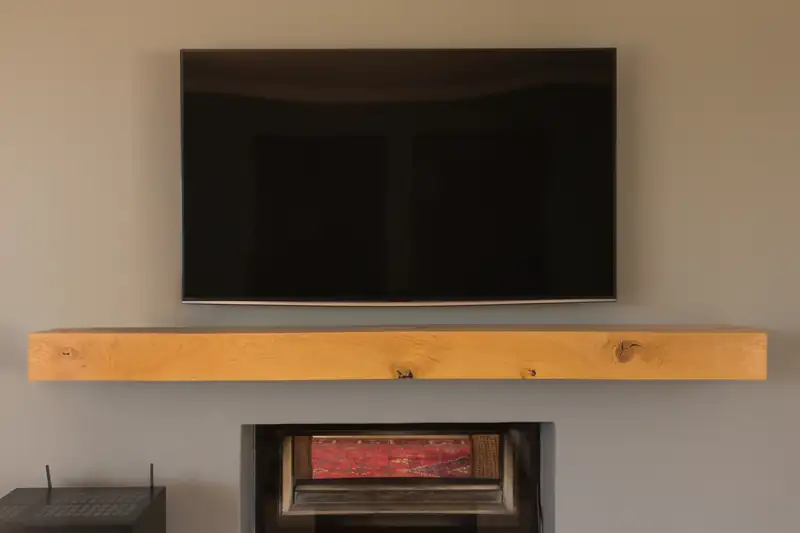
Over the fireplace is a popular TV spot and sometimes the most awkward. The mantel is a natural focal point, but the screen ends up higher than it should be and sometimes warmer than it likes. A bit of planning makes the difference.
Check the heat
A working fireplace sends heat up the wall and over the mantel, especially a wood-burning or gas unit. Electronics have operating temperature limits listed by the maker, so look up your TV's rating and compare it with how hot the wall actually gets. A hand held at the spot after the fire has been burning an hour tells you a lot.
Heat is why a mantel sometimes works as a shield and sometimes does not. If the wall gets hot, a different location or a pull-down mount is worth discussing.
Height and viewing
Most people watch best with the middle of the screen near seated eye level. Over a fireplace the screen center is often much higher. A mount that tilts down helps, and a pull-down or articulating arm can bring the screen to a comfortable height when you watch.
Sit on your sofa and look at the spot. If you have to tip your head back, the position is wrong, no matter how neat it looks on a plan.
What is behind the wall
A fireplace surround may be drywall, stone veneer, brick or tile, each of which calls for different fasteners. The mount has to reach framing or solid masonry, and a heavy TV should never hang from drywall alone. We confirm the wall during a visit before promising a spot.
See our flat panel TV installation page for the mounting side of the job.
Choosing the mount
A fixed mount holds the screen flat and close to the wall. A tilting mount angles it down, which helps over a mantel. A pull-down or articulating arm brings the screen lower or out from the wall while you watch, then folds back when you are done.
Every mount needs solid fastening, and the heavier the arm, the more the wall behind it matters. A pull-down arm also needs clearance above the mantel and room for the cables to move with it, which is one more reason to plan the cable route before the screen goes up.
Hiding the cables
A clean install runs the HDMI and low-voltage cables inside the wall to a shelf or cabinet, and the equipment lives there instead of on the mantel. In a masonry surround, the route often goes around the stone, which is why planning matters. Where a TV location is known in a new build, include it in the prewire checklist.
On every project we coordinate with your builder and other trades so the work fits together.
Sound and equipment
A TV above a fireplace is a good spot for a soundbar or in-wall speakers placed at ear level, since the TV's speakers sit high. If you want better sound, read planning whole-home audio, or ask us about home theater options.
A decision list
- Test the wall temperature while the fireplace is running.
- Sit and judge the viewing height.
- Find out what is behind the wall: framing, stone or a flue chase.
- Choose a fixed, tilting or pull-down mount.
- Choose where the equipment will live and how cables will reach it.
Older homes and surrounds
Regional housing data from the Census puts the median Reno home at about 1990 and the median Carson City home at about 1981, so many local fireplaces predate flat screens by decades. Older surrounds can be deeper, narrower or built from material that was never planned for a TV. That is an argument for a look at the wall before anyone picks a spot. The figures are in the Census table of median year built.
Sources (3)
- U.S. Census Bureau: data.census.gov/table/ACSDT5Y2024.B25035?g=160XX00US3260600,160XX00US3209700 (checked November 2026)
- law.cornell.edu: law.cornell.edu/regulations/nevada/NAC-624-200 (checked November 2026)
- Nevada State Contractors Board: app.nvcontractorsboard.com/Clients/NVSCB/Public/ContractorLicenseSearch/ContractorLicenseS (checked November 2026)