A monitored smoke detector is connected to a control panel that sends a signal to a central station when it senses smoke, so someone can act even when nobody is home. In Northern Nevada, a household fire alarm system built to NFPA 72 can replace stand-alone smoke alarms, with plans and a permit first.
Key points
- A monitored detector reports to a central station, not just to the people in the house.
- The signal can travel over a phone line, internet or cellular connection.
- Northern Nevada allows an NFPA 72 household system to replace stand-alone smoke alarms.
- Plans, a permit and a licensed installer come first.
- Ask your insurer whether monitoring changes your premium.
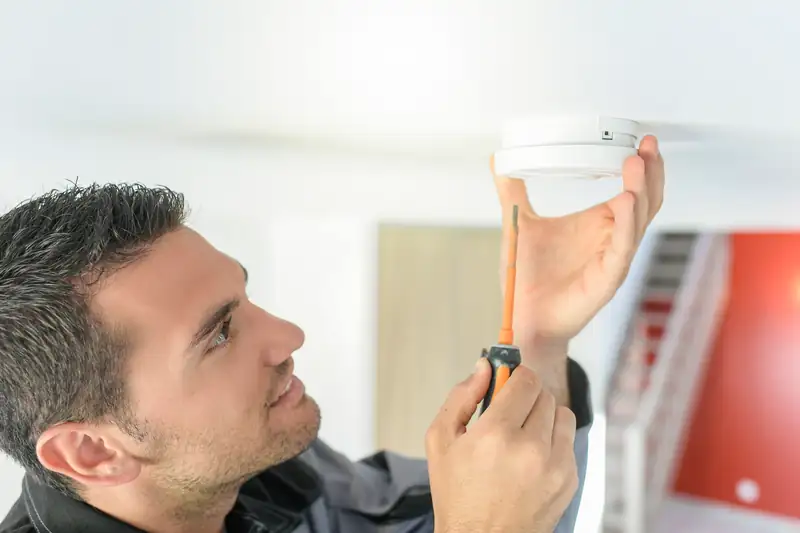
An ordinary smoke alarm makes noise and relies on someone hearing it. A monitored one adds a second line of defense: the signal leaves the house. That is the difference people usually mean when they ask about monitoring, and it is worth knowing what is actually happening behind the wall before you pay for it.
What happens when it detects smoke
The detector tells the system's control panel. The panel sounds the alarm in the home and sends a signal to the central station that monitors it. An operator at the station then follows the call plan for the account, which can include calling the home or dispatching the fire department.
Our UL-listed central station is staffed by highly trained operators, and it handles fire signals as well as intrusion signals. See our fire alarm monitoring page for the service itself.
How the signal gets out
Monitoring can travel over a standard phone line (POTS), over the internet (IP) or over a cellular connection, and Systems of Nevada monitors over all three. Each has strengths. A cellular communicator does not depend on the home's internet or phone service, and an internet path is useful when it is stable. Our cellular, IP and landline comparison goes through the trade-offs.
Connections age. AT&T shut down its 3G network on February 22, 2022, and 1.5 to 2 million alarm devices needed upgrades, according to Axios. An alarm whose communicator cannot connect still sounds in the house but cannot reach the monitoring center. That is why we recommend checking the communicator periodically, and why the landline phase-out guide matters for older systems.
A household fire alarm system under the local code
Amendment 907.2.11.8 of the Northern Nevada fire code lets a fire alarm system that meets the household requirements of NFPA 72 replace single-station and multiple-station smoke alarms. It states that plans and a permit are required before installation, and that installers must hold both a Contractors Board license and a State Fire Marshal F license.
We hold Contractors Board license 0042143 and State Fire Marshal license F 486, and we work in low-voltage detection and alarm systems. Our permits and plan review guide walks through the paperwork.
Stand-alone alarm or monitored system
| Stand-alone smoke alarm | Monitored detection | |
|---|---|---|
| Who hears it | Only people in or near the home | People in the home and the central station |
| When nobody is home | Sounds in an empty house | Signal still goes to the station |
| Local code | Tested and maintained per manufacturer and code | Household NFPA 72 system with plans and permit |
| Upkeep | Monthly testing, replace at ten years | Testing and inspection, plus communicator checks |
Whichever you choose, NFPA's ten-year replacement guidance applies to the alarms themselves. See the 10-year smoke alarm guide.
Insurance
The Insurance Information Institute says you can usually get discounts of at least 5 percent for a smoke detector, burglar alarm or dead-bolt locks, and that some companies cut premiums by as much as 15 or 20 percent when sprinklers are combined with fire and burglar alarms ringing at a monitoring station. It also warns that not every system qualifies. We do not promise a discount; ask your insurer what documentation it needs.
Questions to ask before you buy
- Is the central station UL-listed, and how does it contact you?
- Which paths does the communicator use, and what happens when one fails?
- Who handles the permit and the plan review?
- How will the system be tested and inspected afterward?
- Who answers the phone when a detector needs service?
Sources (4)
- City of Reno: reno.gov/Documents/Fire/Prevention/2024%20IFC%20amendments%20RFD%20012026.pdf (checked November 2026)
- iii.org: iii.org/article/12-ways-to-lower-your-homeowners-insurance-costs (checked November 2026)
- axios.com: axios.com/2022/02/22/att-3g-sunset-wireless-disrupt-devices (checked November 2026)
- UL Solutions: ul.com/services/central-station-service-certification (checked November 2026)